
Bía Sleep vs. Manta Sound: Which Sleep Mask Is Right for You?
Compare Bía and Manta across blackout, audio, brain sensing, overnight support, comfort, and wake-up features.
 Michael Byrne August 05, 2026 4 min read
At first glance, Bía Sleep and Manta Sound look like two high-end sleep masks. Both block light and let you listen to audio, but they are built to solve very different problems.
Manta Sound is a focused blackout mask with thin Bluetooth speakers. It gives you a dark, calm space and lets you play your own music.
Bía is a complete sleep system. It reads brain, body, and room signals, then uses those data to adapt sound and support your sleep from lights out to sunrise.
Quick verdict
Choose Bía Sleep if: You want a smart sleep mask that can measure and improve your sleep, auto-pause your own audio, and help shape the way you wake up.
Choose Manta Sound if: You want a simple, highly adjustable blackout mask with thin Bluetooth speakers and no sleep tracking.
What are the differences between Bía and Manta Sound?
1. Bluetooth Sleep Mask vs Smart Sleep Mask.
Bía Sleep and Manta Sound both provide 100% blackout and are designed for side sleepers. Those shared features create a dark and comfortable place to sleep, so they are not the main reason to choose one mask over the other.
The difference begins once you put the mask on.
Bía uses neurotechnology designed to improve all aspects of the sleep experience:
- Meditations guided by light.
- Neural Soundscapes, designed by neuroscientists, to help guide your brain toward deeper sleep.
- Neurofeedback actively helps your brain stay in deep sleep longer and resist late night wakeups.
- Smart Sunrise Alarm wakes you up gently to your own personal sunrise and rise & shine audio tracks.
- and many more...
Bía also collects heart rate, heart rate variability (HRV), blood oxygen, breathing rate, movement, temperature, noise, and much more. This gives you richer sleep stats from more sensors and more types of data.
The honest verdict: Manta's simpler design may be a plus if you do not want sleep data or active support. Pick Bía if you want your mask to take a more active role in helping you sleep from blackout to sunrise.
2. Bone-Conduction Audio vs. Traditional Speakers
Manta Sound places thin Bluetooth speakers beside your ears. These are traditional speakers, which means the music moves through the air and into your ear canal.
Manta says its speaker design limits sound leakage at a normal volume, but the music still travels through the air and may be heard outside the mask as you increase the volume.
Bía uses bone-conduction audio. Instead of placing a speaker over each ear, it sends vibrations through the foam of the mask that your ears pick up as sound. This keeps the audio self-contained and removes the need to add speakers over your ears.
The honest verdict: Pick Manta Sound if you want the simplest and most familiar path to Bluetooth audio. Pick Bía if you want bone-conduction audio, less hardware over your ears, and sound that is less likely to disturb your partner.
3. Timed Auto-off vs. Sleep-Aware Auto-Pause
Both masks let you stream your favourite sleep music, meditation, podcast, or audiobook, but what happens once you fall asleep?
Manta Sound has an auto-off feature that turns the mask off 30 minutes after the audio stops playing - that means your audiobook or podcast will keep playing long after you fall asleep.
The sensors inside Bía can detect when you fall asleep and pause your audiobook or podcast at the right time saving your place for the next day.
Once your own content stops, Bía turns off Bluetooth and switches to Neural Soundscapes stored on the mask. These sound cues adapt to your sleep state improving deep sleep.
The honest verdict: Pick Manta Sound if a manual playback timer is enough for you. Pick Bía Sleep if you want the mask to pause your content, save your place, and continue supporting you after you've fallen asleep
Where Bía stands out
Bía stands out for people who want the mask to take a more active role in their sleep. It is designed to sense sleep, adjust its support, guide habits, and shape the way you wake each day.
The case for Bía is not more audio or more data. It is a more complete and personal sleep system.
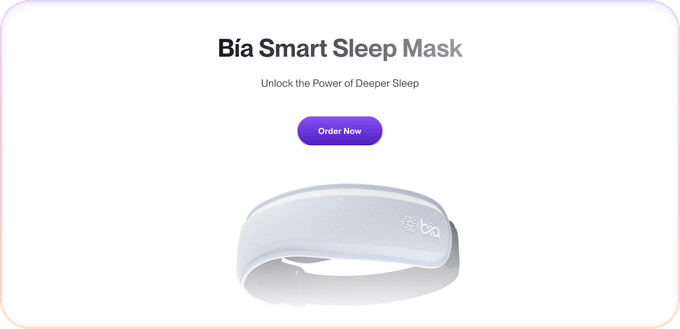
Bía is designed for the more active role.
Sleep Autopilot is built to measure sleep signals and adjust Neural Soundscapes in real time. Manta SOUND can play audio that you find calming, but its current product page does not list sleep sensing or sound that changes based on your sleep state.
This does not guarantee that every person will sleep better with Bía. It means Bía has been built to provide more personal and responsive support.
Manta SOUND plays audio from a paired Bluetooth device. You can listen to music, white noise, podcasts, audiobooks, meditations, or other content.
Bía also supports Bluetooth streaming. Its Auto-Pause feature is designed to stop your content when you fall asleep so you do not lose your place.
The Air-conduction speakers in Manta Sleep move sound through the air, so some leakage is possible.
Bía's bone-conduction audio keeps the sound self-contained instead of playing it through speakers beside the ears.
Bluetooth is needed when you want Manta Sleep to play audio from a phone, tablet, or other paired device.
Bía’s core sleep program is designed to work without Bluetooth or Wi-Fi overnight. A connection is needed before sleep to select a program, after waking to upload sleep data, or when the user chooses to stream personal audio.
Yes, but remove the electronics first.Manta's battery and speakers snap out through a magnetic opening. Its eye cups and washable strap layers can then be machine washed in cold water and laid flat to dry.
Bía's electronics can also be removed so the remaining cloth layers can be washed and laid flat to dry. Always follow the latest care guide included with either product.
Manta uses air-conduction speakers placed beside the ears. Bía uses bone-conduction audio, so there are no speaker pads sitting over your ears or between the sides of your head and the pillow.


