
Bía Sleep vs. Elemind: fNIRS Sleep Mask or EEG Headband?
Sleep trackinwearables tell you what happened last night. Bía and Elemind take it one step further.
 Michael Byrne September 02, 2026 5 min read
Sleep tracking wearables tell you what happened last night. Bía and Elemind take it a step further.
Bía and Elemind both use brain data to help as you sleep, but their designs lead to different types of support. Elemind is an EEG headband focused on timed sound. Bía is an fNIRS sleep mask built to support you through the whole night, from lights out to sunrise.
Each device is different in what it can sense, how it responds, and the data you see the next day.
The Quick Pick
Pick Bía if: You want one system built to support the whole night. It gives you full blackout, no-touch brain sensing, and sound that can adapt. It also adds haptic cues, rich sleep data, and a gentle sunrise.
Pick Elemind if: You want a light EEG headband built around brain waves and timed sound.
The main difference: Elemind uses a headband to focus on EEG and sound. Bía uses a sleep mask to support the entire sleep experience. It creates the darkness you need at bedtime, promotes deep sleep during the night, and wakes you with a personalized sunrise in the morning.
What are the differences between Bía and Elemind?
1. EEG vs fNIRS: Two ways to measure sleep activity
Both Bía and Elemind capture brain data, but they capture different signals on different timescales.
How Elemind uses EEG
EEG is short for electroencephalography and it reads fast changes in the brain's electrical waves.
Small pads touch your skin to detect waves linked to an alert mind. Elemind then plays audio at a precise point in each wave, which helps guide the brain from awake to asleep.
EEG is known to be fast, but it needs stable skin contact to work well. Things like sweat and head movement can break the connection and cause data issues throughout the night.
How Bía uses fNIRS
fNIRS is short for functional near-infrared spectroscopy, and it uses safe light to read changes in blood flow and blood oxygen in your brain.
With Bía, the sensor uses light instead of exposed contact pads, so it is designed to last for the life of the LEDs without touching your skin.
The same optical system also collects heart rate, heart rate variability (HRV), blood oxygenation, and breathing rate. This gives you richer sleep data from fewer sensors.
A simple way to picture the difference
Think of your brain as a large event taking place in a city, with the people at the event representing brain activity. EEG gives you a zoomed in view on a small group of people where fNIRS would provides a bird's-eye view showing you how people move around the event.
Both give you useful information. EEG is more localized, while fNIRS is more spatial.
The honest verdict: Sleep is a slow process. EEG gives you fast detail on brain waves, but movement or lost contact can cause data problems through the night. fNIRS offers a wider view of slow brain changes and provides more biometric data without skin contact issues.
2. Headband vs Sleep Mask
The shape of each device changes how it works and how much of your sleep experience it can control.
Elemind is a light headband made with soft cloth. It leaves your eyes free, so light from a window, screen, airport gate, or plane cabin can keep your brain alert and make it take longer to fall asleep.
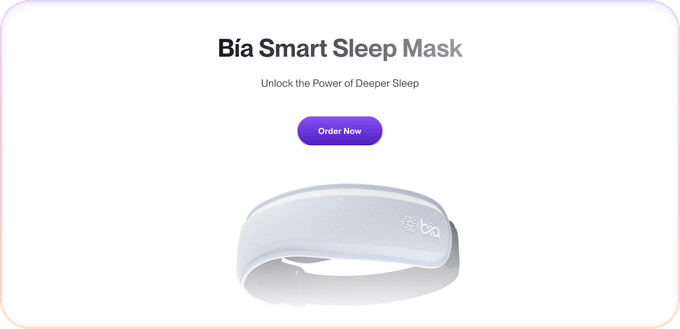
Bía creates a 100% blackout experience using deep eye pockets improving the time it takes you to fall asleep. Its size allows room for more powerful hardware, additional sensors, and built-in sunrise lights. Those parts work as one system across the whole night from blackout at bedtime to a warm sunrise when you wake up.
Bía improves all aspects of the sleep experience and through it's sleep mask design it's able to offer more features:
- 100% blackout design giving your brain a strong signal to fall asleep.
- Meditations where you breath in and out with the lighting.
- Beautiful sunrise wakeup each morning, on your own schedule, giving you energy to start the day.
- and many more...
The honest verdict: Bía takes the spot as they aim to control and improve all aspects of the sleep experience including what you see and hear.
3. Sound cues vs Neural Soundscapes
Both devices use bone-conduction speakers to play music, but what they play and when they play it is different.
Elemind listens for brain patterns linked to sleep onset, then plays short, timed audio cues such as pulses of pink noise. The aim is to break the pattern that’s keeping you awake and help your brain move towards sleep. If you wake later, you can tap the headband or use the app to start the sound again.
Bía's Neural Soundscapes use a patent-pending mix of audio techniques to guide brain activity. The sound changes as Bía reads shifts in your brain activity, helping you fall asleep, maximizing deep sleep, reducing late-night wake-ups, and waking you up at the right time in your sleep cycle.
The honest verdict: Elemind focuses on EEG-timed sound for sleep onset, Bía takes it one step further by designing sound that optimizes the entire sleep process, from lights out to waking up.
Where Bía stands out
Bía touches every aspect of the sleep experience, not one short part of the night. It combines no-contact brain sensing, blackout, neural soundscapes, and a sunrise wakeup in one sleep-first form.
For someone who wants help shaping the whole sleep experience, not only reading data or falling asleep faster, Bía is the stronger fit.
There is no public head-to-head study that proves one product is more accurate than the other. They also measure different signals. Elemind reads electrical brain activity with EEG. Bía uses fNIRS to track changes linked to blood oxygen and blood flow. Accuracy can also depend on fit, signal quality, and the sleep stage being measured.
Both can help when you sleep at unusual times, but Bía adds full blackout, time shift, adaptive sound, and a sunrise wake-up. Together, these tools give you more control over when your sleep space feels dark and when your day begins.
Yes. Bía was designed using advanced head shape scans and should work perfectly for 99% of people.
Deep eye cups leave room for your eyes, while the soft sides have no hard parts that press on your head. You can also remove the tech and wash the cloth parts.


