
Bía Sleep vs. Somnee: fNIRS Sleep Mask or tACS Headband?
Compare Bía and Somnee across audio neurofeedback, electrical neurostimulation, ease of use, overnight wear, and full-night support.
 Michael Byrne August 19, 2026 4 min read
Sleep trackers tell you what happened last night. Bía and Somnee aim to change what happens while you sleep.
Both are active, brain-based sleep products, but they take different approaches. Somnee uses electrical neurostimulation in a short session before bed while Bía uses brain entrainment and neurofeedback as part of a complete sleep system that works from lights out to sunrise.
The right choice depends on three things: the type of stimulation you want, how much setup you are willing to do, and how much of the night you want the device to support.
The Quick Pick
Choose Bía if: You want contact-free brain sensing, full blackout, sound that adapts to your brain activity, and a sunrise wake-up on your own schedule.
Choose Somnee if: You want a focused 15-minute session before bed and do not want to wear a device overnight to receive its core benefits.
Biggest difference: Somnee is a focused electrical sleep aid used before bed. Bía is a complete sensory sleep system built to support the full experience, from lights out to sunrise.
What are the differences between Bía and Somnee?
1. Closed-Loop Neurofeedback vs. Electrical Neurostimulation
The first difference is how each device acts on the brain.
Somnee uses transcranial alternating current stimulation, known as tACS. It applies low-level electrical current through your forehead with the goal of supporting brain patterns linked to sleep.
Bía combines neurofeedback with brain entrainment. Brain entrainment helps guide your brain through the different sleep stages, while neurofeedback uses real-time brain data to encourage or discourage a specific response. For example, Neural Soundscapes help guide you towards deeper sleep, while Neurofeedback encourages your brain to stay in deep sleep for longer.
The honest verdict: Both Bía and Somnee use active stimulation to improve sleep, but they deliver it in different ways. Pick Somnee if you want direct electrical neurostimulation. Pick Bía if you want sensory neurofeedback without electrical current applied through the scalp.
2. Nightly Setup vs. No Setup
The second difference is how much effort it takes to begin each session.
Somnee uses EEG to read electrical activity in the brain and hydrogel electrodes to deliver tACS. Those electrodes are sticky and require clean, dry skin.
Before each session, Somnee asks you to clean and dry your forehead, keep hair out of the way, avoid acne or blemishes, and skip creams or skin products beneath the sensors. You also need to position the electrodes correctly and replace them every few nights.
Bía uses functional near-infrared spectroscopy, known as fNIRS. It shines safe near-infrared light toward the brain and measures changes linked to blood oxygen and blood flow. The sensor works without pads touching your skin and is designed to last for years.
The honest verdict: In practice, Bía's fNIRS just works. Put on the mask and start your session without cleaning your forehead, placing hydrogel pads, or keeping replacement electrodes on hand. Somnee requires nightly setup: Skin prep, careful placement, and disposable electrodes.
3. A focused sleep aid vs. a complete sleep system
The third difference is how much of the sleep experience each one is built to support.
Somnee is a 15-minute session before bed. When the session ends, you can remove it before falling asleep and still receive its core benefits. That is a clear advantage if you do not want to wear anything on your head while you sleep.
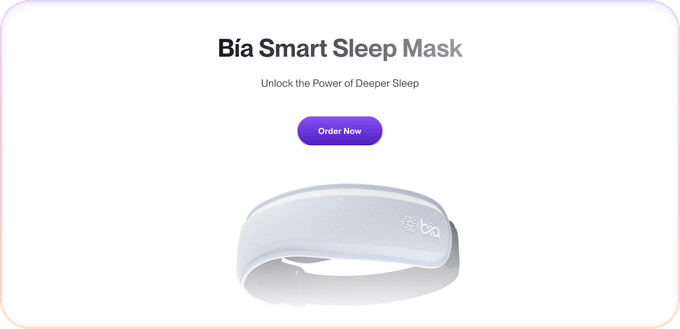
Bía is designed to remain on all night, from lights out to sunrise. It provides 100% Blackout, uses advanced sensors to measure and improve your sleep throughout the night, and includes built-in lighting effects for meditation or a personal sunrise wake-up.
Bía also collects heart rate, heart rate variability (HRV), blood oxygen, breathing rate, movement, temperature, noise, and much more. This gives you richer sleep stats from more sensors and more types of data.
The honest verdict: Pick Somnee if you want a focused session and the least possible overnight wear. Pick Bía if you want a complete sleep system that can shape more of the night, from lights out to sunrise.
Where Bía stands out
Somnee has one clear appeal: you can complete its main 15-minute session, remove the headband, and go to sleep without wearing a device overnight.
Bía stands out because it can support more of your night without sending a current through scalp pads. Its sleep-first design brings fNIRS sensing, 100% Blackout, Neural Soundscapes, Neurofeedback, and a sunrise wake-up into one system.
For a short brain session you can do before bed, Somnee may be the better fit. For one system that supports you from the moment it’s time to go to bed to the time you wake up, Bía is the stronger choice.
Somnee is a focused sleep aid built around a 15-minute electrical neurostimulation session before bed. Bía is a complete sleep system that uses audio neurofeedback and supports your sleep from lights out to sunrise.
Somnee uses EEG data to shape each session, but its core method is electrical neurostimulation. It uses those EEG readings to tune the tACS current applied through scalp electrodes.
Bía is built around audio neurofeedback. It reads your current state, then responds with tailored Neural Soundscapes and other sensory cues.
Somnee applies low-level alternating electrical current through electrodes placed on the scalp. This method is called transcranial alternating current stimulation, or tACS, and its goal is to influence patterns of neural activity linked with sleep.
Somnee's guide says you may feel tingling or see light pulses. You can change the strength or stop the session if it feels uncomfortable.
Somnee offers a 10-minute DriftBack session that you can start with the headband button. Since you can remove Somnee after the main session, you may need to put it back on before using DriftBack.
Bía is already in place and working on autopilot through the night. It can detect when you begin to stir and adapt the audio in realtime without asking you to start a new session.
Yes, but they collect different types of data. Somnee uses EEG+ to report sleep onset, sleep stages, depth, efficiency, and wake-ups when you wear it overnight.
Bía is built for full-night use and combines brain data with heart rate, HRV, blood oxygen, breathing, movement, temperature, and room noise. This gives Bía a richer view of your sleep, your body, and your sleep space.


